
Getting Around in New York City
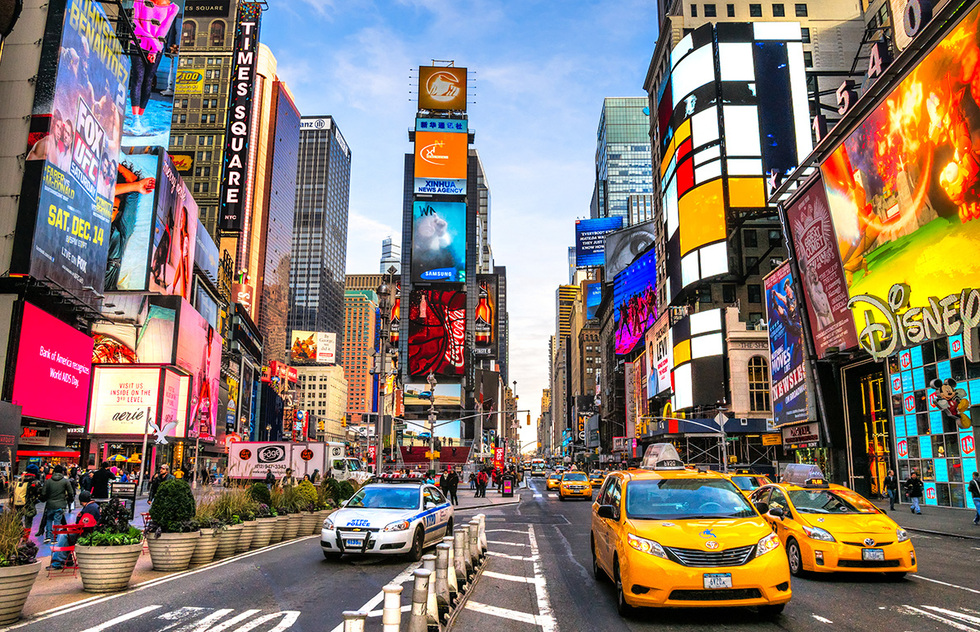
A large number of visitors arrive in New York, settle into Time Square, and never leave. They appear to be reluctant to enter areas where people live for reasons other than tourism.
You are not required to be one of them. You may greatly increase how much you enjoy this complex city by spending a short amount of time learning about New York's basic geography and its unique neighbourhoods. And once you get used to New York's transport system's extremely rational layout, you'll discover that getting around is a breeze.
The Grid Plan of Manhattan
Only one of the city's four distinct pieces of land—out of its five boroughs—is located in North America. However, most people refer to the borough of Manhattan when they use the term "New York City," which is a long, thin island situated between New Jersey and Long Island and bounded by the Hudson and East Rivers.
The meticulous layout that was used to set out the city's avenues and streets makes it easier to navigate Manhattan than in virtually any other city. The city fathers forced a rigid and unnatural grid upon Manhattan in the districts above 14th Street, levelling slopes and demolishing pre-existing homes to construct straight, regularly spaced thoroughfares in all but a few locations. Numbered avenues and streets cross each other at right angles on the grid. You can navigate this surprisingly little island if you can count to 100.
In Manhattan, the streets are numbered and go from east to west. So, to get to 42nd Street from 23rd Street, you just need to travel 19 blocks to the north. Walk 5 blocks south from 80th Street to 75th Street. Manhattan's avenues run north to south; some have numbers and some have names, which slightly complicates the image.
First Avenue is close to the East River and Twelfth Avenue is on the island's extreme western border. The numbered streets run from east to west. Several named avenues, such as Park, Lexington, and Madison, are dotted between these numbered avenues. The designated avenues are generally found in midtown and uptown on the east side between Fifth and Third Avenues. Above 59th Street, Seventh, Eighth, and Ninth Avenues on the west side merge into Columbus Avenue, Central Park West, and Amsterdam Avenue.
The exceptions to the grid rule (all found below 14th Street) are the Financial District, Chinatown, Little Italy, the Lower East Side, Greenwich Village, Soho, and Tribeca. These southern parts of Manhattan were the first to be settled and therefore follow a haphazard non-system of the streets and alleys that curve and twist, sometimes doubling back on themselves (most famously in Greenwich Village where 4th Street collides with 4th Street). Because most of these southern section streets bear names rather than numbers (Delancey Street, Wall Street, Church Street), orientating yourself can be tricky. So it's important to carry a good map and to ask for directions when necessary. Even native New Yorkers can get lost down there
Getting Around the City
Because most travelers confine themselves to Manhattan, I will, as well, in this section. Those traveling to the outer boroughs can be confident, however, that public transportation—subways, buses, ferries, or some combination of the three—can get you anywhere you wish to go in the city proper, whether it be the sandy shores of Brighton Beach, Brooklyn, or Yankee Stadium in the Bronx. The city’s transportation network is run by the Metropolitan Transportation Authority (aka the MTA); maps and schedules for NYC’s myriad transportation options can be found at www.mta.info.
Subway
I wish I could confine my transportation advice to just three words—"take the subway"


0 Comments